
Notifications 9
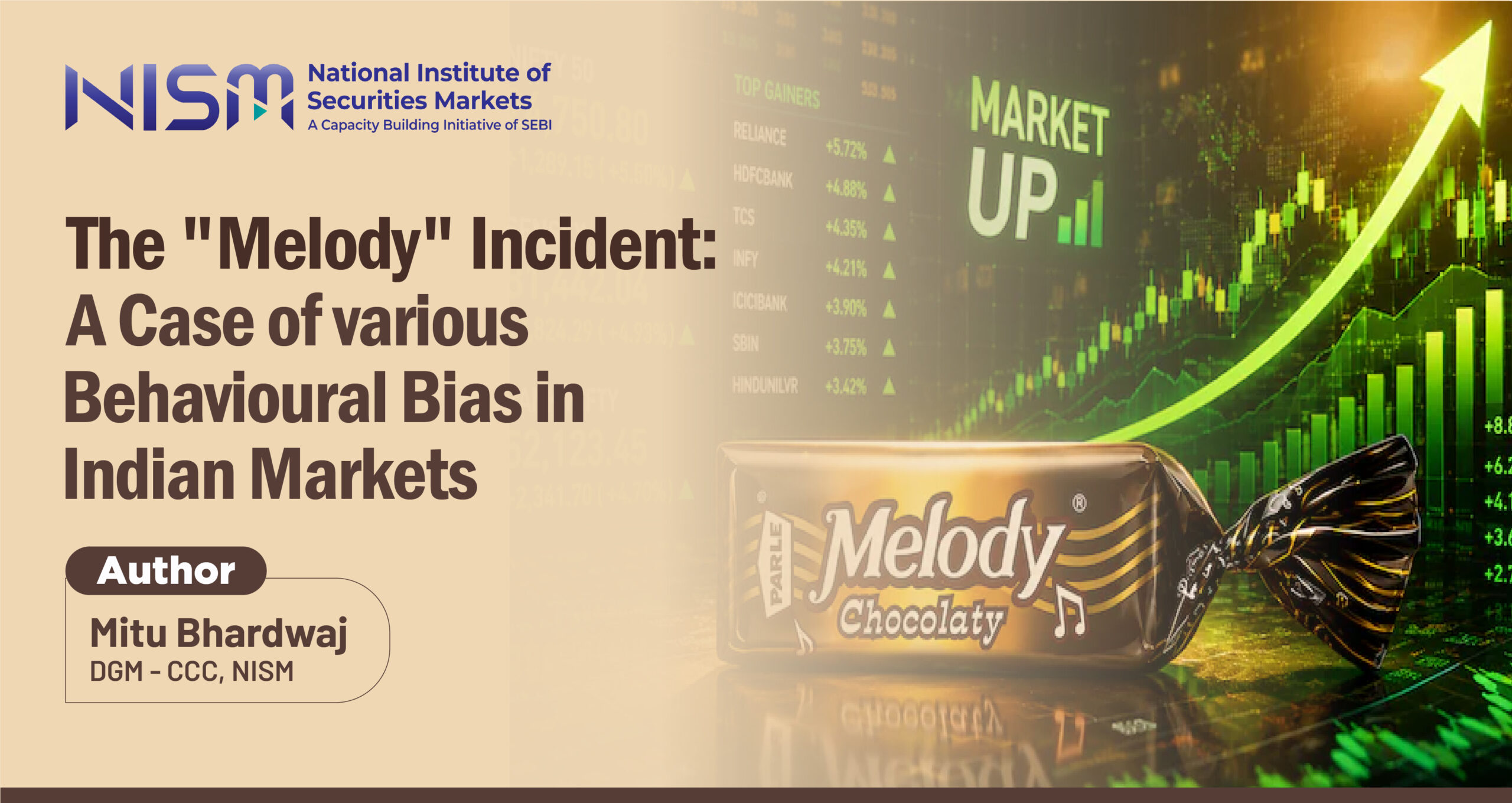
Modern finance often portrays investing as a disciplined arena governed by sophisticated algorithms, rigorous data, and calculated risk management. Standard economic theory dictates that markets are efficient and asset prices perfectly rational. Yet, human nature defies these defenses reminding us that markets are driven by flawed, emotional individuals. This psychological vulnerability was laid bare in May 2026, when a playful diplomatic exchange between Indian Prime Minister Narendra Modi and Italian Prime Minister Giorgia Meloni sparked a bizarre phenomenon on the Indian stock exchange: the “Melody” incident.
Catalyst: The Toffees, Modi Meloni Melody incident
During an official visit to Rome, PM Modi presented PM Meloni with a box of India’s iconic Melody toffees. The video of the exchange instantly exploded across social media. Within hours, retail investors rushed to their brokering apps. Looking to capitalize on the viral hype, they piled into shares of Parle Industries, sending the stock surging to hit its upper circuit limit.
The Problem: But the irony here was Parle Industries has absolutely nothing to do with Melody toffees.
The Reality: Melody toffees are made by Parle Products, a privately held company that is unlisted.
The Mistake: Parle Industries is a micro-cap infrastructure, real estate, and waste recycling firm.
This dramatic case of mistaken identity was a classic textbook case of behavioural bias – a systematic error in thinking that completely clouds human judgment.
The Behavioural Biases behind the Blunder
The “Melody” incident serves as an active case study for several core behavioural finance concepts. When retail money poured into the wrong stock, three primary biases were operating in tandem:
1. Heuristics and the Availability Bias
Human brains are wired to find shortcuts (heuristics) to make quick decisions rather than spending hours digging through data. The Availability Bias causes people to overestimate the importance or relevance of information that is fresh in their minds.
When “Parle” and “Melody” dominated social media feeds, investors didn’t stop to verify corporate structures. Their brains took the easiest, most available shortcut: Melody is trending → Parle makes Melody → Buy Parle on the stock exchange.
2. Representativeness Bias
This bias occurs when investors assume that because two things share a superficial characteristic, they must be fundamentally the same. Because “Parle Industries” sounds nearly identical to “Parle Products,” investors assumed it to be the same.
The international market also saw a lapse in investor’s logic in 2021 when Elon Musk tweeted “Use Signal” (referring to the messaging app), investors drove up the shares of Signal Advance Inc. a small and unrelated medical device company from $0.60 per share to $70 per share. Similarly, during the pandemic, investors repeatedly bought the wrong “Zoom” stock (Zoom Technologies instead of Zoom Video Communications).
3. Herd Behaviour and FOMO
In the digital age, social media acts as an absolute accelerant for market euphoria. The recent SEBI Investor Survey 2025 study noted that an alarming number of retail investors depend strictly on social media trends and influencers to make investment decisions.
When investors saw the volume and price of Parle Industries moving upward, “Herd Behaviour” took over. Driven by the “Fear of Missing Out” individuals blindly followed the crowd.
Explore the NISM Securities Markets Foundation Certification and strengthen your understanding of Indian capital markets, investment products and investor psychology.
Ideal for students, beginners and aspiring finance professionals.
Takeaways
The Melody incident is highly amusing, but it carries a sobering lesson for the retail investors who are key contributors to the trading boom in India. Do your own research for what you see/hear on Social Media for “all that glitters is not gold”. When you purchase a stock without knowing its core business, its capital structure, or whether it even owns the product you are betting on, you aren’t investing – you are gambling. Eventually, the market realizes the mistake. When the excitement dies down, the stock price drops, and the late buyers are left losing their money. The next time a piece of pop culture or geopolitics takes over your social media feed, remember the golden rule of behavioural finance “Pause, filter out the noise, and always check the underlying business before you click ‘Buy’.”
As rightly said by Fred C Kelly, “Crowd enthusiasm, always greatest at the peak of a market, more often leads sensible men to behave foolishly. Nevertheless, the aim should be to have one’s self well enough in hand to be immune to outbursts of mass emotion.”
Author: Mitu Bhardwaj, Work for NISM and views are personal.
The “Melody” Incident: A Case of various Behavioural Bias in Indian Markets Modern finance often portrays investing as a disciplined…

Last Updated on: May 21, 2026 How to Make an Investment Portfolio for Long-Term Wealth Creation In the world of…
The shift towards passive investing is one of the defining trends of this decade. According to NSE Indices’ Nifty Passive…
© 2026 National Institute of Securities Markets (NISM). All rights reserved.
